Know When to Act, What to Look For, and Who to Trust
As a homeowner in Colorado, your roof faces unique challenges: hail damage, heavy snow, strong winds, and intense sun exposure. Whether you’re wondering if your roof needs to be replaced, which roofing contractor to trust or are trying to make sense of your insurance paperwork, this guide will walk you through everything you need to know.
-
Does Your Roof Need to Be Replaced?
Not every issue requires a full replacement—but some signs shouldn’t be ignored.
Visual Red Flags (From the Ground, On Roof or in Attic):
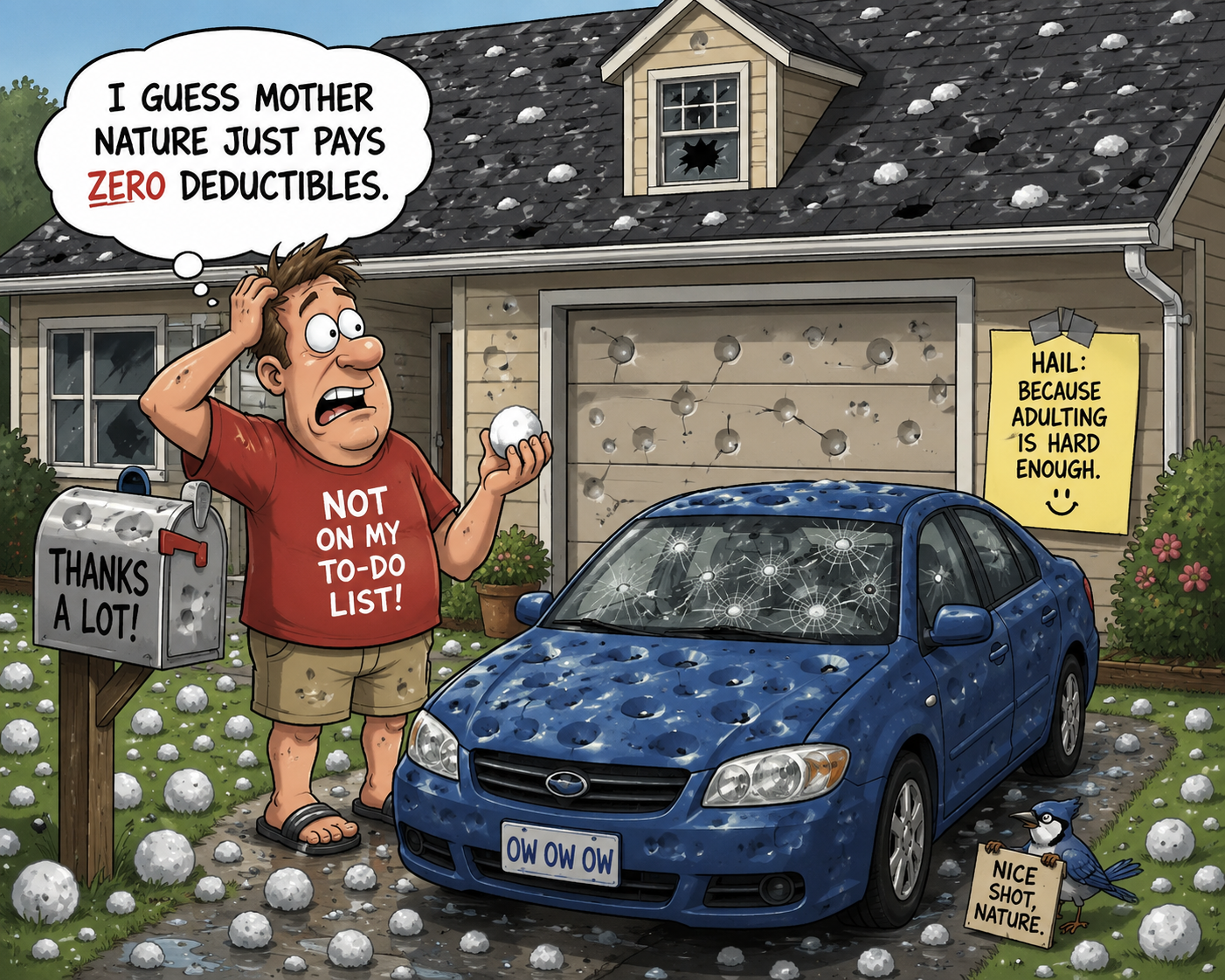
- Dark spots or impact marks from hail. This will typically be widespread across the roof and will look like small circular dark spots on the roof. Hail can also damage the other surfaces of your home such as gutters and downspouts, screens, windows, paint and siding. Signs of hail damage to other surfaces is another good indicator that your roof may need to be inspected.
- Missing, torn, or cracked shingles
- Granule loss (check your gutters and downspouts) This may also look like your shingles are becoming duller in color or beginning to fall apart.
- Sagging areas or visible dips
- Interior water stains or mold in the attic
Age Matters:
- Asphalt shingle roofs typically last 15–30 years.
- If your roof is 15+ years old and you have had a recent hailstorm, a professional inspection is recommended, even without visible damage.
Want peace of mind? We offer complimentary, objective roof inspections for Colorado homeowners. Call us at 303-377-2801, visit www.rmext.com or scan the QR code to schedule an inspection and get peace of mind!
-
Understanding Insurance Paperwork
If you’ve filed a claim for storm damage, here’s how to make sense of your insurance documents.
Key Terms You’ll See:
- RCV (Replacement Cost Value): What it costs to replace your roof at today’s rates.
- ACV (Actual Cash Value): The depreciated value of your roof.
- Deductible: The amount you’re responsible for paying out of pocket.
- Depreciation: Value your roof has lost over time. This may be recoverable (you get it back) or non-recoverable (this means your insurance company expects you to pay this amount plus your deductible).
Your Insurance Paperwork Will Include:
- A line-item estimate for every part of your roof (shingles, vents, flashing, etc.)
- A summary page with your deductible, ACV, depreciation, and RCV
How to Read Your Insurance Estimate:
Step 1: Start with the Summary Page
Look for a page titled something like “Summary” or “Claim Summary.” This page outlines the key financials of your claim.
Key Sections:
Example:
| Item | Amount |
| Replacement Cost (RCV) | $15,000 |
| Less Depreciation | -$3,000 |
| Actual Cash Value (ACV) | $12,000 |
| Less Deductible | -$1,000 |
| Initial Payment | $11,000 |
| Recoverable Depreciation (Paid After Completion) | $3,000 |
Bottom Line: You’ll need to cover your deductible and any non-recoverable depreciation. The rest is paid by the insurer—part up front (ACV), and part after the job is done (recoverable depreciation).
Step 2: Understand the Line Items (Scope of Work)
The next section includes a breakdown of what’s being repaired or replaced. Each line usually has:
- Item name (e.g., “Remove 3-tab shingle roofing”)
- Unit pricing (cost per square, foot, or piece)
- Quantity (how much of the item is being replaced)
- Total cost for that item
- Overhead & Profit: Sometimes added as a % markup for general contractors (usually 10%+10%)
Key Areas to Look For:
- Tear-Off Charges: Removing existing shingles
- Replacement Material: What kind of shingles, underlayment, flashing, vents
- Accessories: Drip edge, ridge cap, ice & water shield
- Labor Charges: Installation cost
- Ventilation or Code Upgrades: Are they paying for things required by local building code?
Tip: Make sure everything damaged in the storm is included—gutters, skylights, flashing, decking, etc. and hire a contractor that is able to handle all trades associated with your claim. This will ensure everything that should be repaired is covered and repaired correctly. Contractors that only do roofs will often times miss or neglect other areas of the home that are damaged and in need of repair.
Step 3: Check for Missing Items or Undervalued Work
It’s common for the initial estimate to miss or undervalue some items. A reputable roofing contractor can:
- Compare the scope to what’s actually on your roof
- Take photos to document missing or damaged components
- Request a supplement from your insurance company if needed
Example: If your insurance scope says “felt paper underlayment” but your local code requires ice & water shield, a supplement may be required.
Tip: Hire a roofing contractor that has their own on-staff claims/supplementing team. This will ensure your claim is handled properly and with as little delay and hassle to you as possible. Most roofing contractors either will not supplement claims which will mean needed services and items are missed or will hire a third party company to supplement your claim which usually means more delays, fees and hassle.
Step 4: Understand How Payments Are Released
- First Check (ACV Payment): Issued soon after claim approval.
- Depreciation Check (Recoverable): Released after the work is completed and you or the contractor provides an invoice and/or completion certificate.
- Deductible: Your insurance company requires that you pay your deductible directly to the contractor who completes the repairs
Step 5: Have a Local Roofing Contractor Review It With You
A good local roofing contractor will:
- Walk through the estimate with you, line by line
- Help identify missing items
- Communicate directly with your insurance company if needed
- Help submit photos or documentation for supplements
- Have an in house claims department to help negotiate and settle your claim
Final Tips:
- Always keep copies of all estimate documents and checks.
- Don’t assume the insurance estimate is 100% accurate—it’s a starting point.
- Don’t pay the contractor until work is complete and you’ve verified everything matches the scope.
We’re happy to review your paperwork with you and explain it line by line. If you’re in Colorado, we’re a local roofing contractor and employ an on staff claims team to help handle your claim directly with your insurance adjuster to minimize delays and hassle for our customers. Call us at 303-377-2801, visit www.rmext.com or scan the QR code to schedule a free inspection and review of your insurance estimate!
-
How to Evaluate a Roofing Contractor
Choosing the right roofing contractor is just as important as the materials on your roof.
Ask These Questions:
- Are you licensed and insured in Colorado?
- How long have you been doing business in Colorado?
- Do you have local references and reviews?
- Do you have on-site production management or who manages your workers?
- Can you help me with damage to my paint, siding, windows, screens etc?
- Do you have an in office claims team to help me negotiate and settle my claim?
- Do you offer a workmanship warranty? (not just a manufacturer’s warranty)
Warning Signs:
- Out-of-state license plates after a storm
- Not licensed in your area – ask for proof
- No experience or very little experience working in your area
- Not able to help you with other trades besides the roof
- No additional supervision for your job besides a “project manager” or “sales rep”
- Does not do supplementing or hires a third party company to supplement claims
- High-pressure sales tactics or “sign now pressure”
- Talking poorly about other companies doing work in the area
- Promising to do the work for no deductible or to waive your deductible. Although this can be appealing, it is illegal and considered insurance fraud which can result in legal consequences for BOTH the contractor and the homeowner
What a Good Roofing Contractor Does:
- Will evaluate your initial insurance estimate and then provides a detailed, written estimate
- Provides dedicated on-site supervision to ensure your project is completed correctly
- Pulls a building permit and complies with necessary inspections
- Helps you understand your insurance scope of work and helps communicate and settle your insurance claim
- Maintains a clean job site and conducts a final walkthrough and check of clean up
- Communicates proactively with you throughout the process. You should never wonder what is going on
- Next Steps: Schedule Your Free Inspection
Most roof problems aren’t obvious until the damage is done. If you’re in Colorado, let us give you a no-obligation, objective and honest inspection and walk you through the next steps—whether that means a repair, full replacement, or no action at all.
What to Expect From the Rocky Mountain Exteriors Team:
- On-site inspection with photos and clear explanation to help you determine if your roof needs to be repaired or replaced
- No sales pressure
- Dedicated on-staff insurance claim assistance
- We handle almost everything associated with residential storm damage claims, so we’ll make sure your full home is repaired properly – not just your roof
- Dedicated on-site field supervision and coordination to ensure your project is completed in a punctual manner and with the best quality and clean up practices in the industry
- Regular communication from our team and through our app to ensure you are never in the dark about what is happening with your project
Protect your biggest investment. Schedule your free roof inspection today.
Call us at 303-377-2801, visit www.rmext.com or click this link to schedule an inspection right now! Free Inspection Link
About Rocky Mountain Exteriors
We’re an Aurora-based roofing and exteriors company dedicated to honesty, quality work, and the best customer experience possible in our industry. We have been serving the Front Range since 2012 and are proud to call Colorado home. With hundreds of successful local projects and more than 500 online 5-star reviews, we’re proud to serve the community we live in.