Wildfire risk has become an increasingly important consideration for Colorado homeowners—and new building requirements are changing how homes in higher-risk areas may need to be built and remodeled.
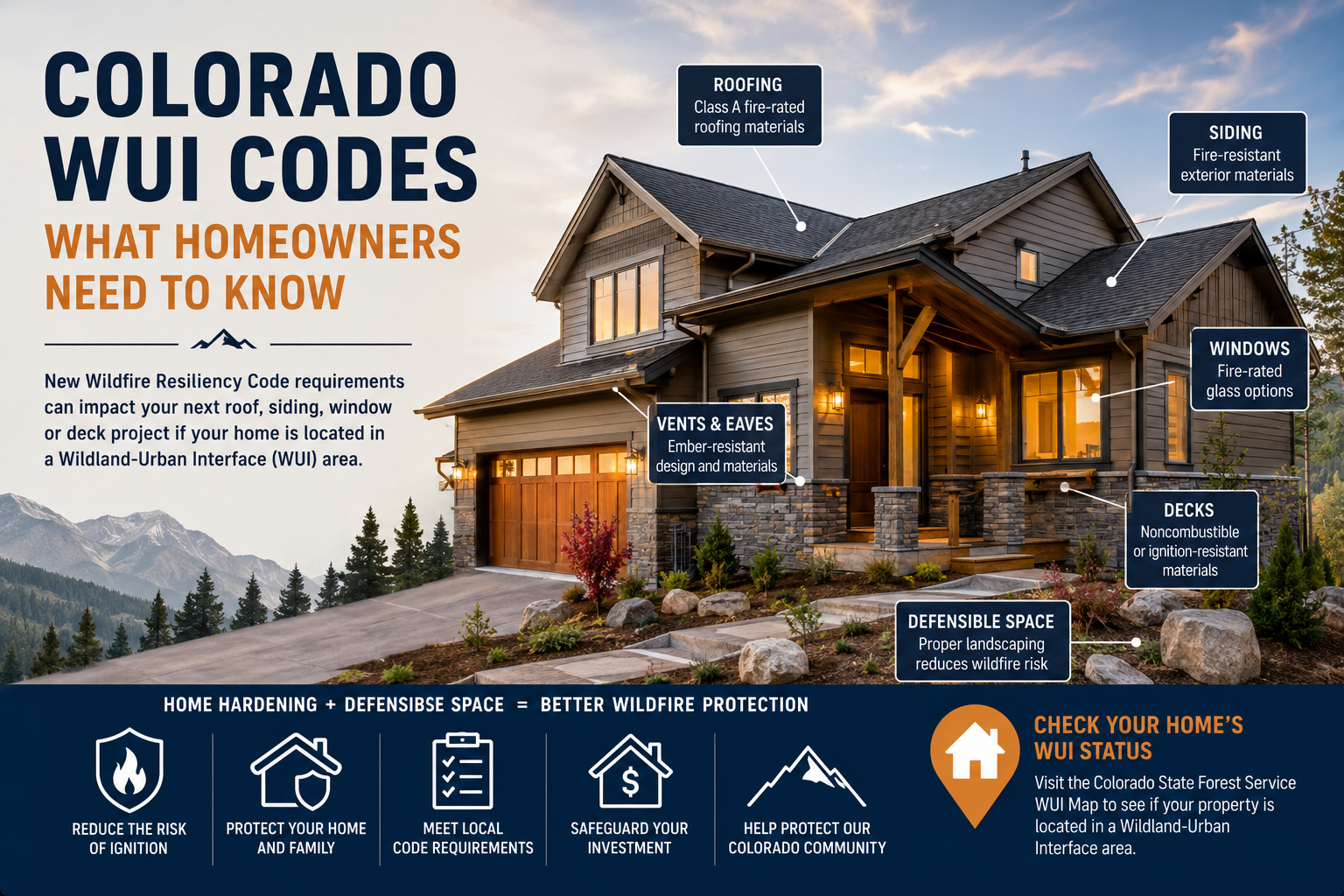
Colorado’s Wildfire Resiliency Code (CWRC) establishes minimum wildfire-resiliency standards for certain construction within designated Wildland-Urban Interface (WUI) areas.
If you own a home in Colorado, particularly along the Front Range, in the foothills, or near areas with significant vegetation and wildfire exposure, these changes could affect your next roof replacement, siding replacement, window project, deck project or major exterior renovation.
Here’s what Colorado homeowners need to know.
What Is the Wildland-Urban Interface (WUI)?
The Wildland-Urban Interface, commonly called the WUI, describes areas where homes and other development meet or intermingle with vegetation and land susceptible to wildfire.
Many homeowners picture a remote mountain cabin when they hear “wildfire zone,” but WUI-designated areas can extend much closer to developed communities including in different parts of Denver and other populated areas along the front range.
In fact, Jefferson County’s updated WUI map, which became effective July 1, 2026, expanded the county’s WUI boundary farther into portions of the plains.
That means homeowners shouldn’t assume their property isn’t affected simply because they don’t live deep in the mountains.
Colorado homeowners can start by entering their address into the Colorado State Forest Service’s interactive WUI map. Because WUI designations and building-code requirements are administered locally, homeowners should also verify their property’s designation with their city or county building department before beginning a roofing, siding, window or exterior remodeling project
https://csfs.colostate.edu/live-wildfire-ready/wildland-urban-interface/?utm_source=chatgpt.com
Does Being in a WUI Mean I Have to Remodel My House?
Generally, no. However it does mean that when you proceed with an exterior project, there may be restrictions as to which material you can install which will be enforced by city building and fire departments.
The restrictions will not be as common with repairs. The 2025 Colorado Wildfire Resiliency Code provides that when 25% or more of an existing material is replaced, the entire covering (siding, roof etc) generally must comply with the applicable requirements for new construction. It establishes a similar 25% threshold for exterior wall replacement. Local adoption and amendments can affect exactly how these requirements apply.
The important takeaway is simple:
Before replacing your roof, siding, windows or other major exterior components, determine whether your home is located within a WUI and what your local building department requires.
How Could WUI Codes Affect Your Roof?
Roofing is one of the most important components of a wildfire-resistant home.
During a wildfire, your home doesn’t necessarily need to come into direct contact with the main fire to ignite. Wind can carry burning embers significant distances, where they may land on roofs, collect in vulnerable areas or enter openings in the structure.
Colorado’s Wildfire Resiliency Code therefore includes requirements intended to make roofing systems more resistant to wildfire exposure.
Depending on the applicable code and jurisdiction, this can include requirements for Class A roof coverings or assemblies, along with requirements addressing vulnerable areas of the roof.
This is already affecting Colorado homeowners.
For example, under Jefferson County’s Wildfire Resiliency Code effective July 1, 2026, if a homeowner replaces an entire roof on a property located within the county’s applicable WUI area, the new roof must comply with the wildfire-resilient roofing standards.
For Colorado homeowners, choosing a roof is increasingly about protecting against multiple threats:
Hail. Wind. Wildfire.
A properly designed roofing system should take all three into consideration.
How Could WUI Codes Affect Siding?
Your home’s siding is another major component of its defense against wildfire.
Traditional combustible exterior materials can increase vulnerability when exposed to flames, radiant heat or burning embers.
Colorado’s wildfire-resiliency standards therefore include requirements addressing exterior walls and siding.
For homeowners considering siding replacement, products such as fiber-cement siding and other qualifying ignition-resistant or noncombustible exterior systems may play an increasingly important role.
Fiber-cement products, including products manufactured by James Hardie, can be an attractive option for homeowners who want the appearance of traditional siding while improving the resilience of their home’s exterior.
However, homeowners should not assume that simply choosing a particular brand or material automatically makes a project WUI compliant.
The entire wall assembly, installation details and local requirements matter.
What About Windows and Exterior Doors?
Windows can be another vulnerable part of a home during a wildfire.
Intense radiant heat can damage glazing, and once a window fails, embers and flames have another potential path into the home.
Wildfire-resilient construction standards can therefore include requirements for exterior glazing and doors.
If you’re planning to replace windows on a home within a designated WUI area, your contractor should determine whether the products being installed satisfy the requirements applicable to your property.
This makes it increasingly important to consider more than appearance and energy efficiency when selecting replacement windows.
Wildfire resilience may now be another factor in the decision.
Don’t Forget Vents, Soffits, Fascia and Gutters
One of the most important concepts homeowners should understand about wildfire is ember intrusion.
A house doesn’t have to be engulfed by a wall of flames to burn.
Small wind-driven embers can find vulnerable areas around the exterior of a home and potentially ignite combustible materials.
That’s why wildfire-resistant construction considers much more than just roofing and siding.
Areas that may need additional attention include:
- Roof and attic vents
- Eaves and soffits
- Fascia
- Gutters
- Roof edges and flashing
- Underfloor areas
- Exterior doors
- Deck framing and surfaces
- Openings and gaps around the exterior
Jefferson County’s current wildfire-resiliency requirements, for example, specifically address roofing, gutters, ventilation openings, exterior walls, flashing, windows, doors, decks, fascia, eaves and soffits.
The goal is to think about the entire exterior envelope of the home, not just one product.
What Is Defensible Space?
Protecting a house from wildfire isn’t only about the materials attached to the house.
It’s also about what’s around the house.
This is known as defensible space.
Defensible space reduces combustible materials surrounding a building, helping decrease exposure to flames, radiant heat and embers.
For example, Jefferson County divides defensible space into three primary areas:
Zone 1: 0–5 feet from the structure
This is the area immediately surrounding the home and requires the greatest attention to combustible materials.
Zone 2: 5–30 feet from the structure
Vegetation and other potential fuels are managed to reduce the ability of fire to spread toward the home.
Zone 3: 30–100 feet from the structure
Vegetation management continues farther away from the home to reduce wildfire intensity and improve overall defensibility.
Exact requirements vary by jurisdiction and project, so homeowners should always check their local regulations.
WUI Requirements Can Vary by Location
This may be the most important thing for Colorado homeowners to understand:
There isn’t one simple rule that applies identically to every property in Colorado.
Colorado has established statewide minimum wildfire-resiliency standards, but local jurisdictions adopt and enforce applicable requirements and may have their own maps, classifications and amendments.
That means two homeowners completing similar siding or roofing projects in different Colorado communities could face different requirements.
Before beginning an exterior remodeling project, determine:
Your address → WUI designation → Local jurisdiction → Permit requirements → Required materials and installation methods
This should happen before materials are ordered, not after construction begins.
How Do WUI Requirements Affect Insurance Claims
This is still a bit of an unknown for companies like ours which handle hundreds of insurance related projects per year. However, our current understanding is that since local building and fire department agencies will enforce WUI restrictions in Colorado and will require contractors to complete repairs with WUI approved materials, this will be handled in the same way other building code upgrades are handled. This means that whether the cost of an upgraded material that is required by a local building jurisdiction is covered as part of an insurance claim or not will be dependent on the affected property owner’s insurance policy and can vary by policy and insurance carrier. If you have questions on how these new codes will affect your policy, it would be best to contact your insurance agent or carrier to make sure you are covered should a major cost be required to stay compliant with new codes in the event of damage to your property.
What Should Colorado Homeowners Do Before Their Next Exterior Project?
If you’re considering replacing your roof, siding, windows, deck or other major exterior components, wildfire resilience should now be part of the conversation.
Ask your contractor:
- Is my home located in a designated WUI?
- Does my project trigger wildfire-resiliency requirements?
- Are the products we’re installing compliant with my local requirements?
- Are there additional requirements for vents, soffits, fascia, flashing or other parts of the exterior?
- Will the project require defensible-space improvements?
The cheapest product isn’t always the least expensive decision in the long run.
Colorado homeowners increasingly need exterior systems designed around the realities of our climate—including hailstorms, high winds, snow, intense UV exposure and wildfire risk.
Planning an Exterior Project in Colorado? Rocky Mountain Exteriors Can Help
At Rocky Mountain Exteriors, we specialize in helping Colorado homeowners improve and protect the exterior of their homes.
Our team works with roofing, siding, windows, painting and other exterior remodeling projects, allowing us to look at the house as a complete exterior system rather than focusing on only one component.
If you’re considering an exterior renovation and are concerned that your property may fall within a Wildland-Urban Interface area, understanding the requirements before selecting materials and beginning construction can save time, money and frustration.
Planning a roof, siding or window replacement? Contact Rocky Mountain Exteriors to discuss your project and learn what exterior options may be appropriate for your Colorado home.
Building codes and WUI designations vary by jurisdiction and can change. This article is intended for general educational purposes and is not a substitute for requirements issued by your local building or fire authority.