

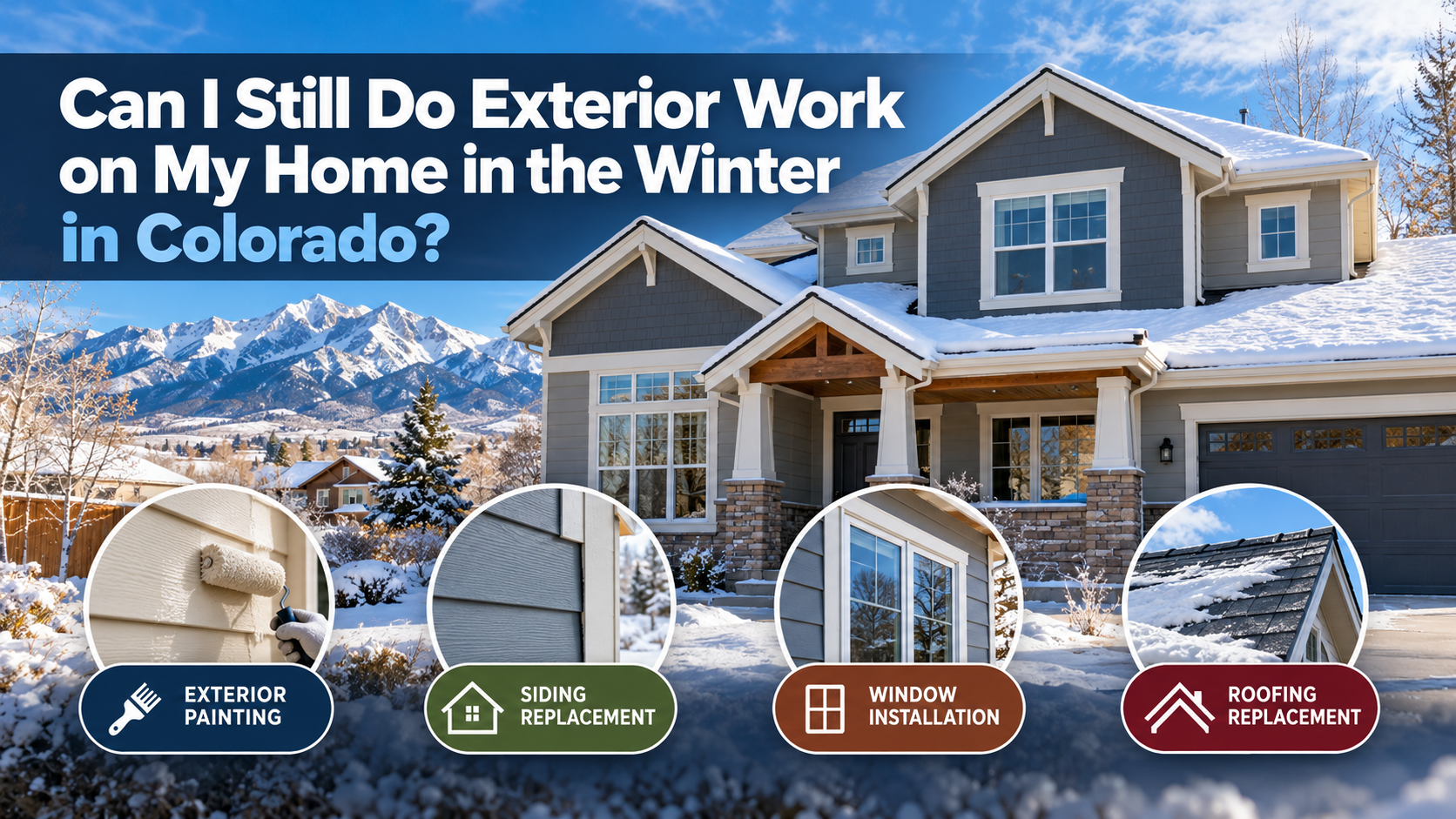
Can I Still Do Exterior Work on My Home in the Winter in Colorado?
The short answer is YES! Exterior painting, siding replacement, window installation, and roofing projects can all be completed during the winter in Colorado, as long as the weather conditions are right.
Many Colorado homeowners assume that once temperatures start dropping and snow begins falling, they have to put their exterior home improvement projects on hold until spring. Fortunately, that’s not necessarily true.
Colorado’s unique climate gives us something that many colder parts of the country don’t enjoy: frequent stretches of sunshine, relatively mild winter days, and opportunities to complete exterior construction projects even in December, January, and February.
At Rocky Mountain Exteriors, we’ve been helping Denver-area homeowners improve their homes since 2012. We’ve learned that the key to successful winter exterior projects isn’t necessarily the time of year. It’s choosing the right weather conditions and scheduling the work accordingly.
Here’s what homeowners should know about exterior painting, siding replacement, window installation, and roofing during winter in Colorado.
Can You Do Exterior Painting During Winter in Colorado?
Yes! Exterior painting during winter is possible in Colorado, but temperature and moisture conditions are extremely important.
When painting a home’s exterior, one of the biggest concerns is ensuring the paint has enough time to dry properly before temperatures drop below freezing.
Paint applied in cold weather can experience adhesion problems, improper curing, and premature failure if conditions aren’t right.
As a general rule, many exterior paints need several hours of suitable temperatures after application to begin drying properly. At Rocky Mountain Exteriors, our preferred guideline for winter exterior painting is:
We want temperatures to be at least 50°F and rising when we begin painting, with adequate time for the paint to dry before temperatures approach freezing.
We generally look for at least four hours of appropriate drying conditions after application, while also following the paint manufacturer’s specific temperature, moisture, and curing requirements.
For example, if the forecast calls for a sunny afternoon with temperatures reaching 55°F, we may have a great opportunity to complete exterior painting work, provided the surfaces are dry and the temperatures remain suitable long enough.
Some modern exterior paints are specifically formulated for lower-temperature applications, creating additional flexibility during colder months.
What Else Matters When Painting During Winter?
Temperature isn’t the only consideration. Our crews also evaluate:
- Surface temperature: The siding, trim, or other surface being painted must be warm enough for proper application.
- Moisture: We cannot paint surfaces covered in frost, snow, ice, or excessive moisture.
- Forecast: We need enough time for the paint to dry and begin curing before temperatures drop or moisture arrives.
- Sun exposure: South-facing portions of a home may warm up faster than shaded areas.
The bottom line: You don’t necessarily need to wait until April or May to paint your home’s exterior. With the right conditions, exterior painting during winter can be completed successfully in Colorado.
Can You Install New Siding During Winter in Colorado?
Absolutely! Siding during winter is one of the exterior improvement projects we can often complete throughout the entire year.
Unlike exterior painting, most siding installation work doesn’t depend on warm temperatures for paint to dry.
At Rocky Mountain Exteriors, we install products such as James Hardie fiber cement siding, which is engineered to withstand Colorado’s changing seasons and harsh weather conditions.
The primary considerations for siding replacement during winter are snow, precipitation, jobsite conditions, and the requirements of the materials being installed.
When Can We Install Siding During Winter?
We can typically continue siding installation when:
- There is no significant snow or precipitation in the forecast during exposed portions of the project.
- There isn’t excessive snow accumulation around the home that would prevent our crews from safely accessing work areas.
- The home’s exterior can be kept properly protected from moisture during installation.
- Temperatures and conditions are appropriate for any caulking, sealants, painting, or other finishing materials required.
For example, if Denver experiences three or four consecutive dry winter days with temperatures in the 40s or 50s, that may provide an excellent opportunity to make progress on a siding replacement project.
Homeowners also don’t necessarily need to worry about the siding itself being exposed to freezing temperatures after installation. Products such as James Hardie fiber cement siding are specifically designed for climates with freezing temperatures, snow, and ice.
The bottom line: If you’re considering siding replacement, winter doesn’t have to delay your project. Siding during winter is often very manageable with experienced installers and proper weather planning.
Can You Replace Windows During Winter in Colorado?
Yes! Window replacement can be completed during winter in Colorado, and many homeowners are surprised at how practical it can be.
Winter window installation requires some additional planning, but it is something our crews can perform throughout much of the season.
The biggest considerations are precipitation, snow, extreme cold, and significant wind.
At Rocky Mountain Exteriors, we generally look for days when:
- There is no snow or rain in the immediate forecast.
- Temperatures aren’t excessively cold.
- Wind conditions allow for safe installation.
- Window openings and surrounding surfaces are free of snow, ice, and moisture.
- Sealants and installation materials can be applied according to manufacturer requirements.
Will My House Get Cold During Winter Window Installation?
This is one of the most common concerns homeowners have.
Fortunately, professional window installers generally work on individual openings rather than removing every window in the house at once.
While some cold air will enter the home during installation, the opening is typically exposed for a limited period before the new window is installed and secured.
In fact, replacing old, drafty windows during winter can be a great way to improve your home’s comfort without waiting several more months.
The bottom line: Winter window replacement is absolutely possible. We simply need to schedule the project when conditions are safe and suitable for proper installation.
Can You Do Roofing During Winter in Colorado?
Yes! Roofing during winter is common in Colorado, but choosing the right weather conditions is essential.
Many homeowners believe a roof replacement must wait until warmer spring weather. In reality, roofing projects can frequently be completed during the winter, provided the roof is dry, clear of snow and ice, and weather conditions allow for safe installation.
At Rocky Mountain Exteriors, our primary considerations for winter roofing projects include:
- No snow, rain, or other precipitation expected during critical installation periods.
- Roof surfaces must be free of snow and ice.
- Safe working conditions for our roofing crews.
- Appropriate temperatures and installation procedures for the roofing materials being used.
- Enough favorable weather to complete the work and properly protect the home.
What If There Is Snow on My Roof?
Having snow on your roof doesn’t automatically mean your roofing project needs to wait until spring.
In some situations, Rocky Mountain Exteriors can send a properly equipped crew to tie off using appropriate fall protection and carefully remove snow from the roof.
This can help prepare the roof for an upcoming stretch of favorable weather.
For example, if a homeowner has snow on their roof but the forecast shows several sunny, dry days ahead, we may be able to remove the snow, verify the roof is dry and safe, and schedule the replacement during that weather window.
Does Cold Weather Affect Asphalt Shingles?
Cold temperatures can make asphalt shingles more brittle and affect how quickly their adhesive strips activate.
Because of this, winter roofing may require additional steps, including special material handling and hand-sealing shingles when required by the manufacturer.
Our goal is not simply to get the roof installed. It’s to ensure the roofing system is installed properly for long-term performance.
The bottom line: Roofing during winter can be completed safely and successfully in Colorado. The important thing is making sure the roof is dry, the weather is appropriate, and installation procedures account for colder temperatures.
Why Colorado Is Different: Winter Doesn’t Mean Every Day Is Freezing
One of the biggest advantages of living along Colorado’s Front Range is that winter weather can change dramatically from week to week.
We might experience a significant snowstorm one week, followed by several sunny days with temperatures climbing into the 40s, 50s, or even higher.
These breaks in winter weather create opportunities for exterior home improvement projects.
At Rocky Mountain Exteriors, we frequently look for three- to four-day stretches of favorable weather to schedule exterior work during winter.
Rather than assuming projects must stop for several months, we monitor the forecast and identify opportunities to complete work when conditions are appropriate.
Sometimes that means adjusting a project’s start date by a few days. Other times, it means coordinating crews and materials so we’re prepared to move forward when a good weather window opens.
Of course, not every winter week will provide suitable conditions, and some projects will require more flexibility than others.
But in many cases, you can improve your home’s exterior during winter without waiting until spring.
Are There Benefits to Scheduling Exterior Home Improvements During Winter?
There can be several advantages to completing exterior projects during the winter months.
1. Get Ahead of the Spring Rush
Spring and summer are popular seasons for painting, siding, roofing, and window replacement.
Scheduling during winter may help you avoid competing with the seasonal increase in homeowner demand.
2. Enjoy Your Home Improvements Sooner
If your home needs a new roof, fresh siding, updated windows, or exterior painting, why wait several months if the weather allows the work to be completed properly now?
3. Address Exterior Problems Before They Get Worse
Damaged siding, deteriorated paint, drafty windows, and roofing issues can become more problematic when exposed to winter weather.
Taking care of these issues when conditions permit may help prevent additional damage and protect your investment.
4. Have Your Home Ready for Spring
Imagine entering spring with your home’s exterior projects already completed.
Instead of coordinating contractors when the weather warms up, you can focus on enjoying your home, landscaping, and outdoor living spaces.
Don’t Wait Until Spring to Start Your Exterior Project
If you’ve been thinking about painting your home, replacing your siding, installing new windows, or replacing your roof, don’t assume you have to wait until warmer weather.
Exterior painting, siding replacement, window installation, and roofing during winter are all possible in Colorado when the weather cooperates.
At Rocky Mountain Exteriors, we understand the unique challenges of Colorado’s climate. Our team works to schedule projects around favorable weather conditions while prioritizing safety, proper installation, and long-lasting results.
Whether you live in Denver, Aurora, Centennial, Parker, Littleton, or another community along the Front Range, we can help you determine whether your exterior project can be completed this winter.
Ready to Get Started?
Contact Rocky Mountain Exteriors today for a free estimate!
We’ll evaluate your project, discuss weather considerations, and help you determine the best time to get started.
Call (303) 377-2801 or visit www.rmext.com to request your free estimate.
Don’t let the calendar stop you from improving your home. The next stretch of beautiful Colorado winter weather could be the perfect opportunity to get your project done!